
Plant-Based Diet Guide: Essential Nutrients, High-Protein Foods & a 7-Day Meal Plan 

How to structure a plant-based meal plan to incorporate adequate nutrients and protein

If you’re looking to transition to a more plant-based diet or are just curious about including more plants in your diet, this blog post is for you! Together, we will explore some nutrients of interest when eating completely plant-based, plant-based protein sources, and an example 7-day plant-based meal plan.
Key Takeaways
- A well-planned plant-based diet can meet your nutrition needs, but some nutrients require special attention: vitamin B12, iron, calcium, vitamin D, zinc, and omega-3 fatty acids.
- Protein needs can be met with foods like tofu, tempeh, seitan, legumes, nuts, seeds, fortified soy milk, and meatless products.
- Explore an example 7-day plant-based meal plan.
Nutrients of Interest for Plant-Based Eaters
When eating entirely plant-based, it’s important to be mindful of a few key nutrients that can be harder to get from plants alone. Some may need a little extra attention or even supplementation. Here are a few to keep an eye on:
Vitamin B12
Vitamin B12 is required for red blood cell production, supports the nervous system & helps our bodies use food for energy. It is primarily found in animal foods such as meat, fish, poultry, eggs, milk, yogurt, and cheese; therefore, getting enough can be difficult for those eating a completely plant-based diet. Vitamin B12 is a nutrient that will need to be supplemented if someone is not consuming any animal products or plant-based foods fortified with B12.
Iron
Iron is needed to make healthy oxygen-carrying red blood cells. Those who eat plant-based foods often need double the iron as those who eat animal foods, as absorption of plant-based iron (non-heme iron) is lower than that of animal-based iron (heme iron). Plant-based sources of iron include foods like tofu, nuts, seeds, legumes, apricots, or leafy greens like spinach and kale. To help your body absorb iron, consume a source of vitamin C during meals, such as citrus fruits, kiwi, bell peppers, or berries.
Calcium
Calcium is important for our bones, teeth, muscle function & to prevent our blood pressure from rising with age. Calcium is found largely in dairy products and fish; however, when eating a plant-based diet, good sources of calcium include leafy greens like kale, collard greens, and boy choy, almonds, soybeans, navy beans, white beans, tofu set with calcium, tahini, blackstrap molasses, broccoli, and fortified plant-based beverages.
Vitamin D
Vitamin D is an important nutrient for maintaining bone health and plays a role in our immune system. While we do produce Vitamin D in our skin when exposed to sunlight, many people living in North America simply do not get enough sunlight, especially in the winter months, to produce adequate amounts of Vitamin D. Plant-based food sources of Vitamin D include fortified foods and certain mushrooms; however, this may be another nutrient worth considering to supplement for many people.
Zinc
Zinc is important for supporting the immune system, wound healing, DNA synthesis, and cellular growth. Similar to iron, absorption of zinc from plant-based sources is lower than zinc from animal sources; therefore, zinc intake may need to be above the recommended amount for those consuming strictly plant-based sources of zinc. Good sources of zinc include whole grains, beans, lentils, tofu, nuts and seeds, and fortified foods.
Omega-3 Fatty Acids
Omega-3s are important for many functions in the body, such as heart health, brain health, the inflammatory response, etc. ALA (alpha-linolenic acid) is a type of omega-3 fatty acid that is available in many plant-based foods like flaxseed, chia seeds, walnuts, hemp seeds, soy foods, etc., and meeting this nutrient’s requirement with a plant-based diet is typically possible. DHA and EPA are the other omega-3 fatty acids that may require supplementation when eating plant-based as they are typically found in fatty fish.
Plant-Based Protein Sources
Many of my clients wonder if they can get enough protein by eating plant-based, and the answer is yes; however, it may require a little more intentionality to ensure you’re getting enough. Some great plant-based sources of protein include:
- Soy products like tofu, tempeh, edamame, soy beverages, meatless products, protein powders, and TVP (textured vegetable protein).
- Seitan which is made of hydrated gluten from wheat. It is very high in protein; approximately 100g of seitan provides about 25g of protein compared to 9g for tofu and 20g for ground beef.
- Legumes like beans, chickpeas, and lentils
- Nuts and Seeds
- Meatless products
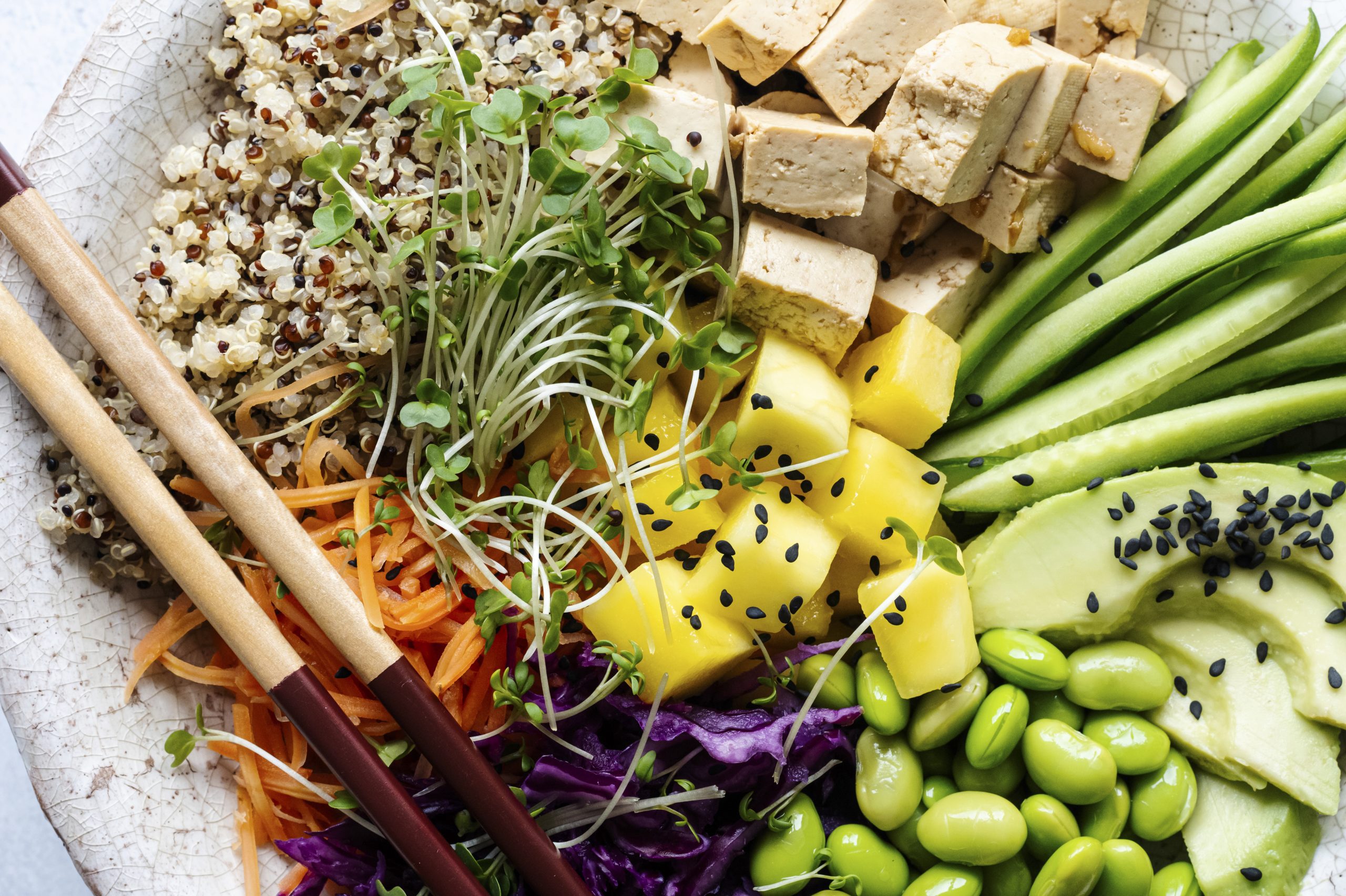
7-day Plant-Based Meal Plan Example:
Day 1
Breakfast: Overnight oats with chia seeds, fortified soy milk, almond butter, and berries
Lunch: Chickpea salad wrap (whole wheat tortilla, chickpeas, tahini, spinach, cucumber)
Snack: Roasted edamame + orange slice
Dinner: Tofu stir-fry with broccoli, brown rice, sesame seeds
Day 2
Breakfast: Smoothie with plant-based protein powder, banana, spinach, flaxseed, and fortified oat milk
Lunch: Lentil soup with kale, quinoa, and whole grain toast
Snack: Pumpkin seeds + dried apricots
Dinner: Tempeh taco bowl with black beans, avocado, red cabbage, and lime
Day 3
Breakfast: Tofu scramble with nutritional yeast, spinach, mushrooms, and toast
Lunch: Quinoa salad with chickpeas, red pepper, and tahini dressing
Snack: Almonds + fortified cereal (dry or with soy milk)
Dinner: Vegan chili (served with brown rice)
Day 4
Breakfast: Chia pudding made with soy milk, topped with kiwi and hemp hearts
Lunch: Hummus and veggie sandwich on whole grain bread with spinach
Snack: Vegan protein bar or trail mix (pumpkin seeds, sunflower seeds, dried fruit)
Dinner: Baked tempeh with roasted sweet potato and sautéed kale
Day 5
Breakfast: Fortified cereal with soy milk and sliced banana
Lunch: White bean and avocado toast + side salad
Snack: Smoothie with hemp protein, berries, flax, and oat milk
Dinner: Stir-fried seitan with broccoli, bok choy, and soba noodles or brown rice
Day 6
Breakfast: Peanut butter on whole grain toast, sliced banana, sprinkle of hemp hearts, with a glass of fortified orange juice
Lunch: Black bean and corn quinoa bowl with tahini-lime sauce
Snack: Edamame with sea salt + dried figs
Dinner: Vegan shepherd’s pie with lentils, peas, carrots, and mashed potato
Day 7
Breakfast: Protein oats with soy milk, hemp seeds, and blueberries
Lunch: Falafel wrap with hummus, cabbage, and tahini sauce
Snack: Brazil nuts and pumpkin seeds + a pear
Dinner: Shredded tofu wrap with hummus and roasted vegetables
Looking for further support in making lifestyle changes? We can help!
Unsure where to start or feeling stuck on the way? Get connected with one of our dietitians who can support you on your journey. We have a team of experienced dietitians who are passionate about coming along side you and finding personalized solutions to your nutrition challenges.
Find out more about our in-person Calgary and Virtual Diabetes Nutritionist services here.
Want more information on eating plant-based? Check out these other blog posts below:
Additional resources for plant-based eating:

Brought to you by our friendly Registered Dietitian team at Health Stand Nutrition Consulting Inc. For more balanced living advice check out our RESOURCE MEGA BANK of nutrition articles, videos, healthy recipes, newsletters and meal planning kits here: www.healthstandnutrition.com/personal-nutrition/resource-mega-bank/
