
Tournament & Game Day Nutrition: What Athletes Should Eat Before, During, and After Competition 

Your game plan for energy, performance, and recovery
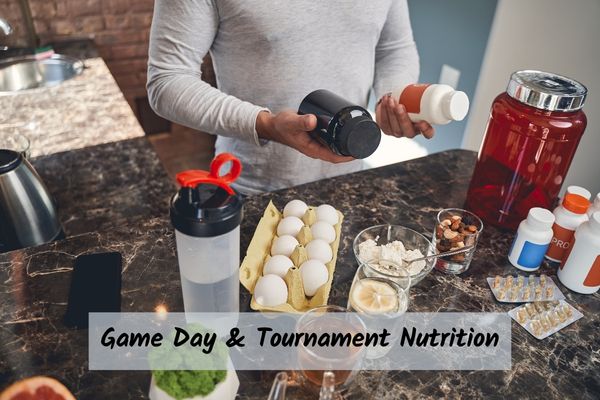
Game days and tournaments demand more than just skill, they require a solid fueling strategy to keep energy high, focus sharp, and recovery on track. What you eat and drink before, during, and after competition can make a big difference in how you perform and how quickly you bounce back for the next game.
In this post, we’ll break down exactly how to fuel for success at every stage of competition. You’ll learn what to eat before games to maximize energy, how to stay fueled and hydrated during play, and what your body needs afterward to recover and be ready to go again. Whether you’re an athlete or a parent supporting one, this guide will give you simple, practical strategies you can use on any game day.
Key Takeaways
- Fuel with carbohydrates before and during competition to maintain energy levels and support performance.
- Prioritize protein after competition to support muscle recovery and adaptation.
- Stay ahead of dehydration by drinking fluids consistently throughout the day, not just when you feel thirsty.
- Keep your nutrition routine consistent by practicing your game-day fueling strategy during training.
What should you eat before a game or tournament?
The goal of pre-game fueling is to provide steady energy, top up carbohydrate stores and ensure you are well hydrated.
I always encourage a follow a 3-2-1 approach for pre-game fueling. This doesn’t mean you need to eat 3 hours pre-game AND 2 hours pre-game AND 1 hour pre-game but rather use this timing as a guideline for what should be eaten when in relation to game time. The gist of it is: the further away from game time, the more balance we want; the closer to game time, the more focus on carbs for quick fuel.
| Timing | Goal | Examples |
|---|---|---|
| 3 Hours Before | Eat a balanced meal that includes whole grains, a source of protein & dietary fats. About half a plate of carbs, ¼ plate of protein & ¼ plate of colour (like fruits & veggies) |
|
| 2 Hours Before | Mostly carbs + some protein. Keep fibre & dietary fats relatively low so they don’t cause stomach upset at game time. |
|
| 1 Hour Before | Quick-digesting carbs. This should be viewed as a “top-up” snack. |
|
3-hours pre-game
Eat a balanced meal that includes whole grains, a source of protein & dietary fats. About half a plate of carbs, ¼ plate of protein & ¼ plate of colour (like fruits & veggies). Be mindful not to go overboard with dietary fats like cream and cheese, as you may not digest this in time, causing potential stomach upset.
Examples:
- Pasta + chicken + red sauce + side salad
- Pancakes or waffles + Greek yogurt + berries + syrup
- Potatoes + salmon + grilled or roasted mixed veggies
- Tortilla + ground beef + beans + cheese + veggies + salsa
2-hours pre-game
Eat mostly carbs with a little protein. Keep fibre & dietary fats relatively low so they don’t cause stomach upset at game time.
Examples:
- Toast + banana + peanut butter
- Turkey sandwich
- Greek yogurt + berries + granola
- Canned tuna + crackers + pc of fruit
- Smoothie (don’t load up on protein powder)
1-hour pre-game
Focus mainly on quick-digesting carbs. This should be viewed as a “top-up” snack.
Examples:
- Goldfish crackers or pretzels
- Apple slices, oranges, grapes or banana
- Fruit sauce pouch
- Dried fruit or fruit leathers
- Juice box
- Honey stick
How should you fuel during long games or tournament days?
Fueling during games should continue to focus on carb intake to maintain energy and delay fatigue & hydration. With competitions lasting 60 minutes or less, water is usually enough to keep us performing well. For competitions 60-90 minutes or multiple games back-to-back, I often encourage athletes to bring a carb-rich snack (like those listed above!) & some electrolytes like a sports drink.
Tournament days should be treated slightly differently depending on how much time we have between games. If we have less than 2 hours before our next competition, opt for carb-rich snacks & a little protein so we don’t feel as hungry. If we have more than 2 hours, go for something with more balance as though it is another pre-game meal. For tournaments, stay on top of this! Don’t wait until you feel hungry or tired to grab a snack.
What are the best game day snacks for athletes?
- Apples, bananas, grapes, oranges
- Fruit sauce pouches
- Dried fruit & fruit leathers
- Crackers or pretzels
- Sports drinks (with carbs/sugars!)
- Rice krispie bars & granola bars

What should you eat after a game for recovery?
In order for your body to be able to adapt to training, it needs to be able to recover, repair, & rebuild for the next training session or game. Providing your body with the right nutrients at the right time is key for recovery. We often do a 2-phase recovery.
| Recovery Phase | Timing | Goal | Nutrition Target | What to Include |
|---|---|---|---|---|
| Phase 1: Immediate Recovery Snack | Within 30-60 minutes after your final game, practice, or event | Begin muscle repair, replenish glycogen stores, and kick-start recovery | Snack with 0.25-0.3 g/kg protein + 0.8-1.2 g/kg carbohydrates | A combination of protein and carbohydrates that is easy to eat and digest |
| Phase 2: Recovery Meal | Within 1-2 hours after competition | Continue glycogen replenishment, support muscle repair, and prepare for your next training session or game | Meal with 0.3-0.4 g/kg protein + 1.0-2.0 g/kg carbohydrates | A balanced meal containing carbohydrates, protein, vegetables, and fluids |
| Recovery Phase | Example Options |
|---|---|
| Phase 1: Immediate Recovery Snack | • 2 cups chocolate milk • 2 oz beef jerky + 8 crackers • 2 slices bread + 4 slices deli meat • 2 hard-boiled eggs + fruit |
| Phase 2: Recovery Meal | • 1 medium potato + 1-2 cups vegetables + 75-100 g steak • 1 cup rice + 2 cups stir-fried vegetables + 75-100 g chicken • Beef burger on a bun + vegetables + potato • Tacos with lean meat, beans, vegetables, cheese, and salsa |
Phase 1 (30-60 mins after last effort)
Consume a snack with 0.25-0.3 g/kg body weight of protein + 0.8-1.2 g/kg carbohydrates
Examples:
- 2 cups chocolate milk
- 2 oz beef jerky + 8 crackers
- 2 slices bread + 4 slices deli meat
- 2 hard-boiled eggs + fruit
Phase 2 (1-2 hours after last effort)
Consume a meal with 0.3-0.4 g/kg body weight of protein + 1.0-2.0 g/kg carbohydrates
Examples:
- 1 medium potato + 1-2 cups cooked veggies + 75-100 g cooked steak
- 1 cup cooked rice + 2 cup stir-fired veggies + 75-100 g cooked chicken
- 1 beef burger + bun + ½ potato + 1 cup cooked veggies
- 1-2 tortillas + 75 g taco meat + ½ cup beans + 1 cup veggies + 30 g cheese + salsa + sour cream or plain Greek yogurt
Sports Dietitian Tip: Recovery starts immediately after competition. Many athletes focus on their next meal but miss the opportunity to start recovery with a protein- and carbohydrate-rich snack within the first hour after play. This becomes even more important during tournaments or when competing on consecutive days.
How does hydration affect performance on game day?
Water is often the most neglected nutrient when it comes to sport. Although it doesn’t provide energy, it is essential to maintaining performance at a high level. The goal is to prevent dehydration, which is when >2% of body mass is lost in the form of fluid during a training session or competition. Athletes can lose fluids through sweat, breathing, urine, & feces. The goal of hydration is not to chug fluids when you feel thirsty, but rather to take consistent mouthfuls every few minutes or between shifts.
Some of the effects of dehydration are:
- Decreased cognitive function – difficulty thinking clearly, focusing and making quick decisions
- Impaired aerobic ability – get tired faster and can’t sustain high level of play
- Reduced ability to perform technical skills – passing, shotting and coordination become less accurate and consistent
Get more tips and insights about how to hydrate yourself better.
What are common game day nutrition mistakes athletes make?
One of the biggest mistakes athletes make on game day is trying something new. What works for someone else might not work for you, so best to trial it on a practice day when the stakes are lower. I often see athletes adding a new supplement or trying a new meal on game day because they saw an influence or professional athlete do it. Stick with foods and routines you have practiced before. Your body will perform best when it knows what to expect.
Game day nutrition doesn’t have to be complicated, it just needs to be consistent. By fueling your body with the right foods at the right time, you give yourself the best chance to feel energized, stay focused and perform at your best. Remember, there’s no one-size-fits-all approach. The best plan is the one that fits your schedule, your preferences and your sport. Practice your fueling like you practice your sport skills, so you know what makes you feel and perform your best.
Looking to maximize your performance through nutrition? Our experienced sports dietitians on our team can help.
Our private one-on-one Sports Nutritionist Services will ensure you receive the best, most credible advice on everyday nutrition and performance-fueling strategies.
Contact us to book a free discovery call to find out how we can help.
Do you have employee/insurance health benefits? Many cover Registered Dietitian services!
If you liked this post, check out these similar posts on our blog:

Registered Dietitian, Erin Hamilton
Sports Nutrition, Digestive Health, Celiac Disease, Chronic Disease, Women’s Health
Erin is a Registered Dietitian and sports nutrition specialist who helps athletes and active individuals optimize performance, recovery, and overall health through evidence-based nutrition. She has experience working with university athletes, high-performance competitors, and teams, while also supporting everyday clients in building sustainable nutrition habits.

Would like to see similar content for endurance events like long day hikes combining distance and elevation. What to pack for snacks and lunch to maintain energy through the day.