
Part 1: Nutrition Strategies for Athletes During the Menstrual Cycle 

Tips for targeting nutrition around your menstrual cycle, energy intake, nutrient timing, and hydration
Sports nutrition, as well as a strong nutritional base, plays an important role in athletic performance. For individuals who menstruate, it can be supportive to start addressing nutrition interventions dependant on the cycle as this can impact nutritional needs.
To be clear, today I will be talking about individuals who menstruate naturally, without the use of oral birth control. In recent years, the science around this topic has really been growing and the science is still young for some of these interventions, so expect this information to continue to grow! Previously, women were tested mainly in one phase of their cycle, when hormones were most consistent, but this left women in the dark for the rest of their phases so I am excited to follow where the research takes us in time.
Hormones fluctuate throughout the menstrual cycle which impacts hydration status and energy needs as well as macro and micronutrient requirements for training, performance, and recovery. A menstrual cycle is often assumed to be around 28 days, however this can vary greatly between individuals. A menstrual cycle may be between 21-35 days and can change a little month to month, so it is important to get to know your own body’s patterns.
Menstrual Cycle Phases & Nutrition Tips
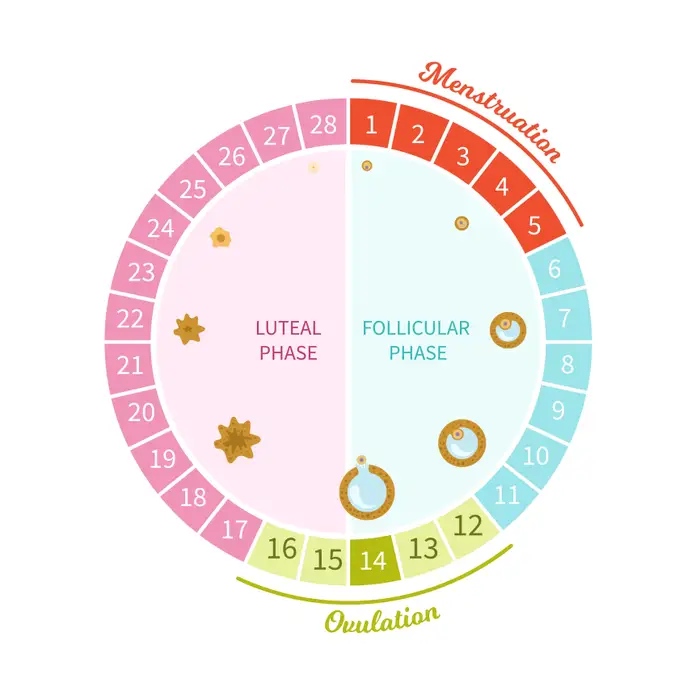
The phases of your cycle are characterized by reproductive hormone fluctuations. The early follicular stage has a lower concentration of estrogen, which increases halfway through the phase and peaks prior to ovulation. Estrogen and progesterone are both elevated in the luteal phase.
Alena Igdeeva/Getty Images
Follicular Phase: The first half of your cycle
Approximately days 1-14, including the menstrual phase at approximately days 1-5
- During the menstrual phase, we want to ensure we replenish iron stores and maintain hydration to support blood volume
- During the follicular phase, there can be increased carbohydrate metabolism.
- Nutritionally, we prioritize eating enough carbohydrates, and frequently enough, for sustained energy and energy storage in the muscles.
Ovulatory phase: Mid-point of your cycle
Approximately days 12-16
- During this short phase there is enhanced insulin sensitivity and muscle protein synthesis.
- Nutritionally, we focus a little extra on consuming adequate protein foods – meats, dairy, eggs, legumes, fish, and plant-based sources support muscle repair and growth
Luteal Phase: Second half of your cycle
Approximately days 17-28
- Increased body temperature.
- During this phase we focus on hydration, the intake of health dietary fats, and once again adequate protein intake.
- As we get closer the to end of the cycle, you may need to be eating more total energy and more protein.
Total Energy Intake & the Menstrual Cycle
We expect to see appetite fluctuations over the course of the cycle as reproductive hormones do impact appetite regulation. However, ensuring adequate energy intake for athletes is essential. For many athletes, training demands do not adjust to their cycle, so nutrition strategies may be needed to target low appetite regardless of high energy outputs. This can help reduce the risk of relative energy deficiency in sport (REDs).
REDs occurs when an athlete is under fueled which negatively affects performance and can lead to a loss of strength and muscle over time as well as several other health concerns. Inadequate intake can lead to worsened concentration and a higher risk of injury. Changes to the menstrual cycle or a loss of menstruation can occur signalling that a hormone imbalance has occurred from under-nutrition. Another potential danger of under-nourishing the body is a reduction in bone mineral density which increases risk of injury and stress fractures.
It is also important to know that naturally cycling individuals experience an increased total energy need and increased protein requirement in the luteal phase. This means that athletes may have to make an even greater effort to reach adequate nutrition during this phase.
Nutrition strategies to support adequate intake can include:
- Leaning more on mechanical eating or eating by the clock because hunger cues are not as present.
- Eating foods that are lower volume foods or “liquidy” foods can help reduce the sense of early fullness. Examples of lower volume foods include smoothies, yogurt parfaits, chicken salad, grain-based salads, trail mixes, and choosing cooked vegetables over raw.
- Focusing on consuming protein throughout the day at all meals and snacks. This includes meat, fish, eggs, dairy, legumes, plant-based protein sources, and third-party tested protein powders.
Nutrient Timing for Sports Performance
For persons who naturally menstruate, timing intake around training and performance can help to maximize the body’s adaptive response to training load. What this means is focusing in on your pre-training, during training, and post training nutrition strategies. These should be targeted towards your individual training load and goals with considerations given to the phase of your menstrual cycle.
Before training, you will want to have adequate energy sources on board by having both a balanced pre training meal and often a small snack prior to training.
During activity that is lasting longer than 90 minutes, athletes are recommended to consume 30-60g of carbohydrate per hour.
For example, this would equate to 60-120 g of carbohydrate for a 2-hour training session. In food, this would look like 6 -12 arrowroot crackers and a large banana OR 1 gatorade and 1-2 honey stinger waffles during activity.
We know that reproductive hormones also impact gastrointestinal (GI) symptoms. Naturally menstruating athletes may need to monitor their menstrual cycle related to times of higher GI issues as well as this can impact nutrition strategies during these times. For example, when GI issues are of concern, start fuelling during exercise at 30g of carbohydrates per hour instead of the higher 60g per hour that may be tolerated at other times of the cycle.
While there has been some discussion about the recovery window after exercise in recent years, we know that consuming protein and carbohydrate quickly after exercise helps to replenish the muscles with glycogen (energy) and to support muscle protein synthesis or to prevent the muscle breakdown that occurs in the hours after exercise. While more research targeting menstruating individuals is needed, we do know that protein needs will vary based on hormonal status and phase of the cycle. We will get further into the protein discussion in part two.
These targeted adjustments should be individualized and can be done with the support of registered dietitian who has additional training in sports nutrition.
Hydration is key!
Reproductive hormones impact temperature regulation, fluid balance and blood volume in the body. These all have a direct relationship to exercise as it has been shown time and time again that dehydration hinders sport performance. No matter what phase of the cycle an athlete is in, the goal throughout exercise is to maintain hydration status.
The research completed on hydration strategies have noted the positive impact of using fluids containing carbohydrate and electrolytes during training or performance. They saw increased time to exhaustion and faster times during the follicular phase when this method of hydration was used. As a hydration intervention, taking in fluids that contain electrolytes and carbohydrates during activity is thought to reduce the rate of water loss while also promoting water absorption which supports performance by maintaining fluid balance and reducing the incidence of dehydration. It is unknown is this same hydration strategy is as effective in the luteal phase.
Overall, regardless of the menstrual phase, we know that eating enough, getting adequate carbohydrate intake, and balancing a diet full of colourful foods supports training, performance, muscle repair and growth while also reducing injury risk. Don’t forget to keep thinking about hydration and rest or sleep in this process too.
Sports nutrition strategies should be very individualized. If you are interested in learning more about nutrition and working with your body as it cycles, reach out of a sport trained RD.
Stay Tuned for part 2 of this series where we dive into more specific nutrient recommendations such as protein and iron.
Interested in nutrition support to gain energy and feel your best? Learn more about our nutrition counselling services!
If you’re stuck with figuring out what, when, and how to eat, you’re not alone. Our registered dietitians offer nutrition counselling to help you reach your goals whether it’s increased energy, meal planning, health prevention, or gaining strategies to improve your relationship with food, we can help.
Learn more about sports nutrition counselling or simply contact us below to find out more:
Check out these related posts on our blog:

Jana Spindler
Disordered Eating, Emotional Eating & Sports Nutrition
Fitness enthusiast and lover of all things food, Jana is passionate about helping her clients improve their relationship with food and their body. She is a strong, motivational leader. Jana also offers the balance of a warm, supportive coaching style to nudge her clients from their comfort zone while feeling safe and supported. She specializes in mental health, eating disorders, body image and sports nutrition.
...Read more
