
Aligning Nutrition to Menstrual Cycle Part 2: Supplements and Other Helpful Lifestyle Changes 

4 Key vitamins and supplements to support menstruation
This blog continues our conversation around aligning nutrition to the menstrual cycle. Please see Part 1 exploring key nutritional considerations for menstruation.
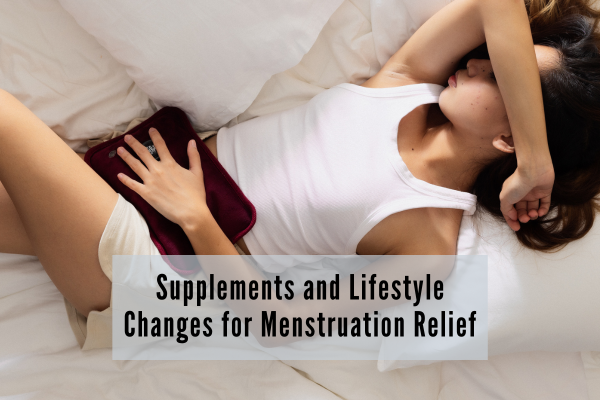
What are some helpful supplements for regulating menstruation?
1. Magnesium
Magnesium is a supplement shown to help with sleep disturbances, constipation, muscle cramping and water retention. As such it can be a helpful supplement to support smoother periods.
2. Omega 3
While there is no conclusive evidence for omega 3 helping with menstruation, its anti-inflammatory qualities can be supportive in conditions like endometriosis and painful, heavy periods. Consuming healthy fats in general is great for healthy hormone production.
3. Probiotics
They can support healthy microflora which in turn can help with absorption of key nutrients to support healthy hormone balance. Hormone imbalance can result in problematic digestive symptoms such as paradoxical diarrhea and constipation.
4. Vitamin B complex
B vitamins help with carbohydrate metabolism, which can be altered with rising hormones affecting blood sugar control. Many women with painful or irregular periods complain of sugar cravings that affect migraines and mood. B6 in particular has been shown to help with mood during premenstrual syndrome (pms), and there is evidence now that it also plays a role in fertility. Women using oral contraceptives are amongst the most at risk with B6 deficiency.
Talk to your doctor or dietitian how to incorporate these supplements into your diet.
Other lifestyle changes with a great impact on healthy menstruation:
1. Stress Management
Dr Randa J. Jalloul, MD, OB-GYN specialist with UT Physicians explains that “stress, whether emotional, nutritional, or physical, can cause an increase in endorphins and cortisol secretion which interrupt hormone production.” This can lead to an abnormal menstrual cycle, which is the body’s natural way of expressing unreadiness for ovulation and pregnancy.
Stress management strategies, good sleep habits, and emotional regulation are all great places to start creating less cortisol and balancing hormones.
If an Eating Disorder (ED) exists, nutritional rehabilitation is key to support healthy regular menstruation. Note that use of the birth control pill will mask hormonal absences and may make hormone irregularities less apparent and harder to tackle at the root cause.
2. Exercise
A healthy routine of regular activity can support overall health in women. It may help to change the type of exercise according to the menstrual phase. For example, healing nature walks or gentle yoga may be more suited during the menstrual cycle phase. This can keep women active and in shape while reducing stress and pushing through more high energy workouts when the body needs more tender, love and care.
Instead, high energy workouts can be scheduled towards 2 weeks after menstruation when energy is at its peak and testosterone production is supporting you. Over-exercising can disrupt hormone balance and lead to menstrual irregularity.
Mix and match cardio, weight training, stretching and rest days. The point is to listen to your body, while building joyful body movement that affirms your womanhood.
Read about amenorrhea: athletes with no period here.
3. Learn Body Literacy
Start charting your periods! This is one great way to get to know your body, how it works and what it needs to thrive. Here is a link to useful apps to consider for menstrual tracking.
Knowing what phase of the menstrual cycle you are on can be a road map to what is best for you and help you individualize nutrition, supplement use, stress management and exercise routine! Naturally it will help you build compassion for yourself as you venture into the chaotic but beautiful journey of hormone changes!
Action Plan
Choose an app to track your menstrual cycle. Adapt your eating, supplements, exercise, stress management routines to your findings, and comment below.
Interested in nutrition support to gain energy and feel your best? Learn more about our nutrition counselling services!
If you’re stuck with figuring out what, when, and how to eat, you’re not alone. Our registered dietitians offer nutrition counselling to help you reach your goals whether it’s increased energy, meal planning, health prevention, or gaining strategies to improve your relationship with food, we can help.
Learn more about meal planning nutrition counselling or simply contact us below to find out more:
Check out these related posts on our blog:

Brought to you by our friendly Registered Dietitian team at Health Stand Nutrition Consulting Inc. For more balanced living advice check out our RESOURCE MEGA BANK of nutrition articles, videos, healthy recipes, newsletters and meal planning kits here: www.healthstandnutrition.com/personal-nutrition/resource-mega-bank/
