
Is 100g of Protein a Day Too Much? A Dietitian Explains 

Here’s what a Sports Dietitian wants you to know before chasing a number
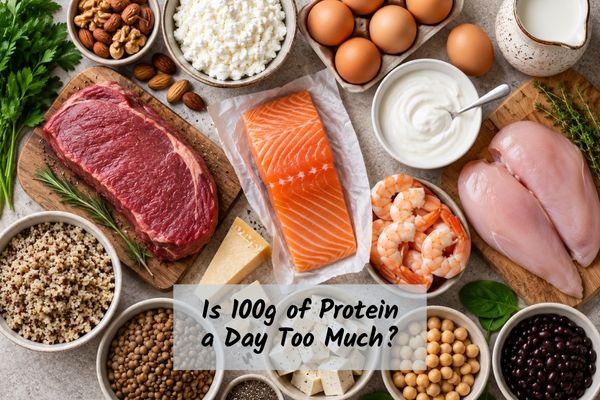
If you’ve seen “100g of protein a day” floating around social media and wondered if you should be hitting that number too, you’re not alone. It’s one of the most common protein questions I get asked as a Sports Dietitian. The short answer: for most adults, 100g is more than what’s needed, and protein needs come down to your body weight, activity level, and life stage rather than a flat number everyone should aim for.
Here’s how to figure out what’s actually right for you.
Key Takeaways
- Most adults need 0.8 g/kg body weight per day of protein to meet their needs
- Protein needs are individualized
- Balance matters – a healthy diet includes protein, carbohydrates, healthy fats, & plenty of fruit & vegetables
- The quality of your overall eating pattern matters more than hitting a specific protein intake goal
How much protein do most adults actually need each day?
According to Health Canada’s dietary reference intake, adults (19 years and over) need 0.8 grams of protein per kilogram of body weight. Some population groups like females in pregnancy or lactation, older adults, athletes, & people with certain health conditions may have different protein needs.
Want to calculate your own estimated need? Take your weight in pounds, divide by 2.2 to get your weight in kg, then multiply by 0.8. For example, someone who weighs 150 lbs would divide by 2.2 (68 kg), then multiply by 0.8, landing at about 54 grams of protein per day.
Is 100g protein appropriate for everyone, or does it depend?
Since protein requirements are based on body weight, 100 g per day is NOT appropriate for everyone. Age, gender & lifestyle goals should also be taken into consideration to determine the appropriate protein intake amount. Athletes for example, have recommended daily protein intakes of 1.4-2.0 g/kg/d in order to improve training adaptations.
Can eating too much protein have downsides?
Yes! Consistently eating beyond the current RDA can have some downsides. More protein does not automatically equate to more muscle mass or greater health.
According to a review done on the adverse effects associated with protein intake about the RDA, here are some of the downsides of too much protein:
- Constipation & bloating
- Feeling overly full
- Slightly increased risk of dehydration
- Higher intake of saturated fat & sodium (if eating primarily animal-based products)
How can people meet their protein needs through regular meals without tracking?
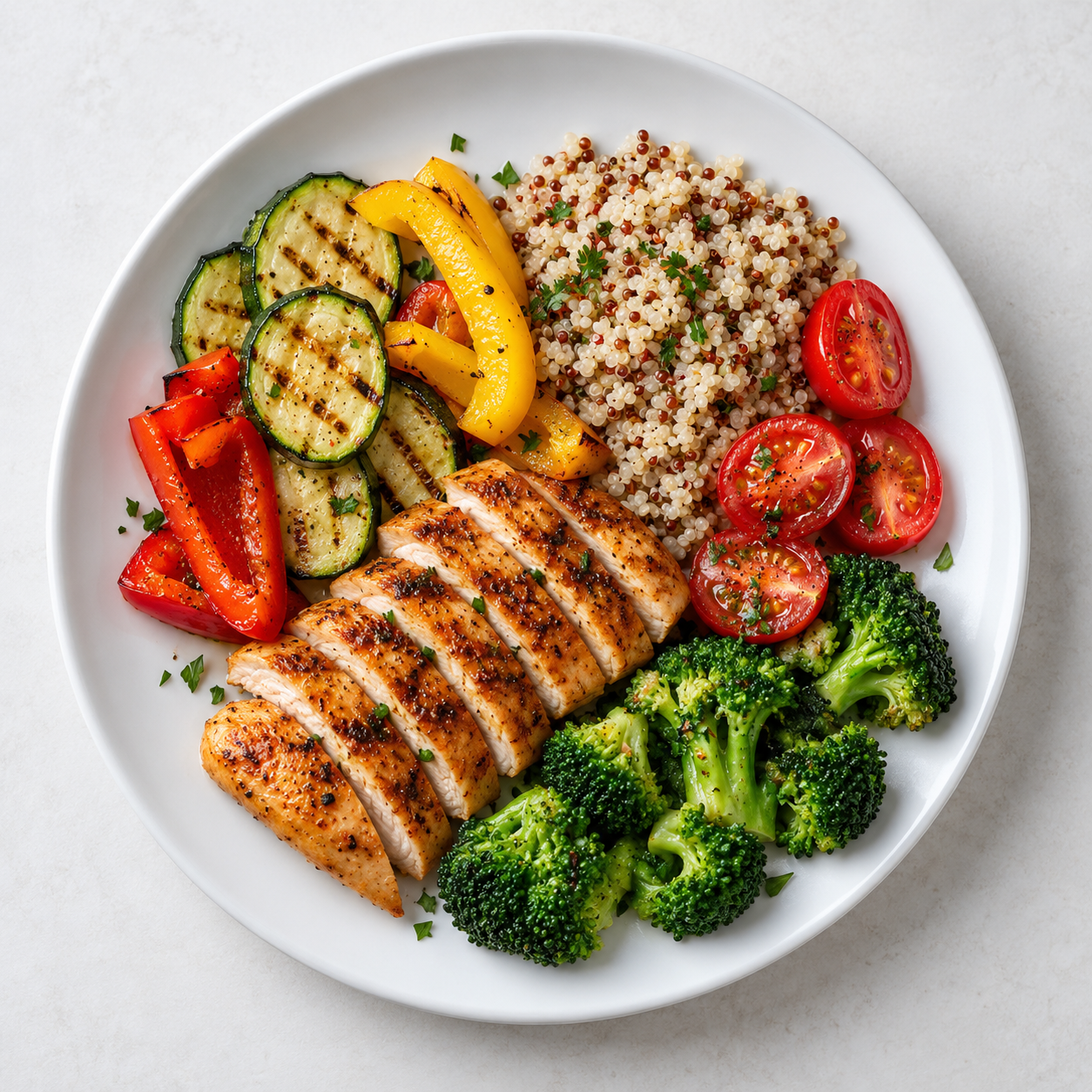
Most people can meet their protein needs by simply including a source of protein at each meal and snack. A simple approach would be to use the balanced plate method, where we aim for ¼ of your plate to be protein-rich foods.
Including foods like eggs, fish, poultry, lean meats, Greek yogurt, milk, cheese, tofu, beans, lentils, nuts, & seeds. For many, eating protein consistently throughout the day naturally provides enough without needing to track every gram.
Does spreading protein throughout the day make a difference?
Your body uses protein most effectively when it has been spread across the day’s meals & snacks rather than consumed all at once. Consistent protein intake can help improve fullness & satisfaction following meals, & can help support muscle maintenance & repair for up to 24 hours following physical activity. Aiming for a moderate amount of protein at each meal is more beneficial than trying to eat a very large amount all at once.
What are common myths about high-protein diets?
Myth #1: Everyone needs 100 g of protein daily.
As previously stated, protein needs are not a one-size-fits-all number.
Myth #2: More protein = more muscle.
There is more than just protein intake that goes into building muscle like resistance training, enough total calories & recovery.
Myth #3: You need a protein supplement to meet your daily needs.
Most individuals can meet their daily protein requirements through regular foods, however, a supplement may be beneficial for those who struggle to intake enough food in a day.
The bottom line on protein
So, is 100g of protein too much? For some people, no. For most people, yes, more than they actually need. The number that matters is the one that fits your body, your activity level, and your life stage, not a generic number you saw online.
My advice as a Registered Dietitian: stop chasing a target and start paying attention to what’s on your plate. Include a source of protein at each meal and snack, aim for that ¼ plate portion, and let the rest take care of itself. You don’t need to track grams of protein to eat well.
If you’re active, training for something specific, or just want help figuring out what your body actually needs, that’s exactly the kind of question a dietitian can help you answer one-on-one.
Looking for personalized nutrition support with your protein needs?
Wondering how much protein you actually need? Protein needs can vary based on your body, activity level, life stage, and health goals. Our Registered Dietitians can help you understand your individual needs and build an approach that fits your lifestyle without chasing arbitrary numbers or tracking every gram. Whether you’re active, training toward a goal, or simply looking to feel confident about your nutrition, we can help you figure out what works for you.
Reach out to our team to book a free discovery call and learn more about our nutrition programs and specialized dietitians.

Registered Dietitian, Erin Hamilton
Sports Nutrition, Digestive Health, Celiac Disease, Chronic Disease, Women’s Health
Erin is a Registered Dietitian and sports nutrition specialist who helps athletes and active individuals optimize performance, recovery, and overall health through evidence-based nutrition. She has experience working with university athletes, high-performance competitors, and teams, while also supporting everyday clients in building sustainable nutrition habits.
