
The Balanced Plate Method: A Simple Guide to Portion Sizes for Adults (No Tracking Needed) 

An easy way to understand portion sizes and build nourishing and balanced meals without tracking or strict rules

Many clients ask me about portion sizes – what’s “normal,” how to know how much to eat, and whether they need to start tracking food or counting calories and macros.
While tracking or detailed label reading can be helpful for some people, it can also require significant time and energy. For those who have had a complicated relationship with food, tracking may feel overwhelming or unhelpful.
So, the question becomes: how can we build balanced portions without measuring, tracking, or overanalyzing labels?
The balanced plate method is a simple, practical place to start. In this post, we’ll explore what the balanced plate method is, how it can guide portion sizes for adults, and some common misconceptions and limitations of using this approach.
Key Takeaways
- Portion sizes don’t have to be measured or tracked to be balanced.
- The balanced plate method is a simple visual tool to guide nourishing meals.
- Your portion needs are personal and can change from day to day for many reasons.
- Carbohydrates, protein, fibre, and fats all play important roles in a satisfying plate.
- Hunger and fullness cues are just as important as portion visuals.
What is the balanced plate method?
The balanced plate method is a visual way to build a satisfying, nourishing meal using your eyes and hands as guides.
A balanced meal includes three main food groups:
Grains/Starches
Examples: rice, potatoes, corn, pasta, bread, bagels, crackers, naan, barley, oats, etc.
These foods provide carbohydrates, which are the body’s main source of energy for the brain and muscles.
Protein Foods
Examples: meat, seafood, eggs, tofu, nuts and seeds, Greek yogurt, cottage cheese, lentils, beans, etc.
Protein supports muscle, bones, skin, hormones, and helps meals feel satisfying and filling.
Non-Starchy Vegetables and Fruit
Examples: leafy greens, cucumbers, broccoli, tomatoes, bell peppers, berries, apples, bananas, mango, etc.
These foods provide fibre, vitamins, minerals, and antioxidants.
How do portion sizes differ between food groups?
Using your plate as a guide:
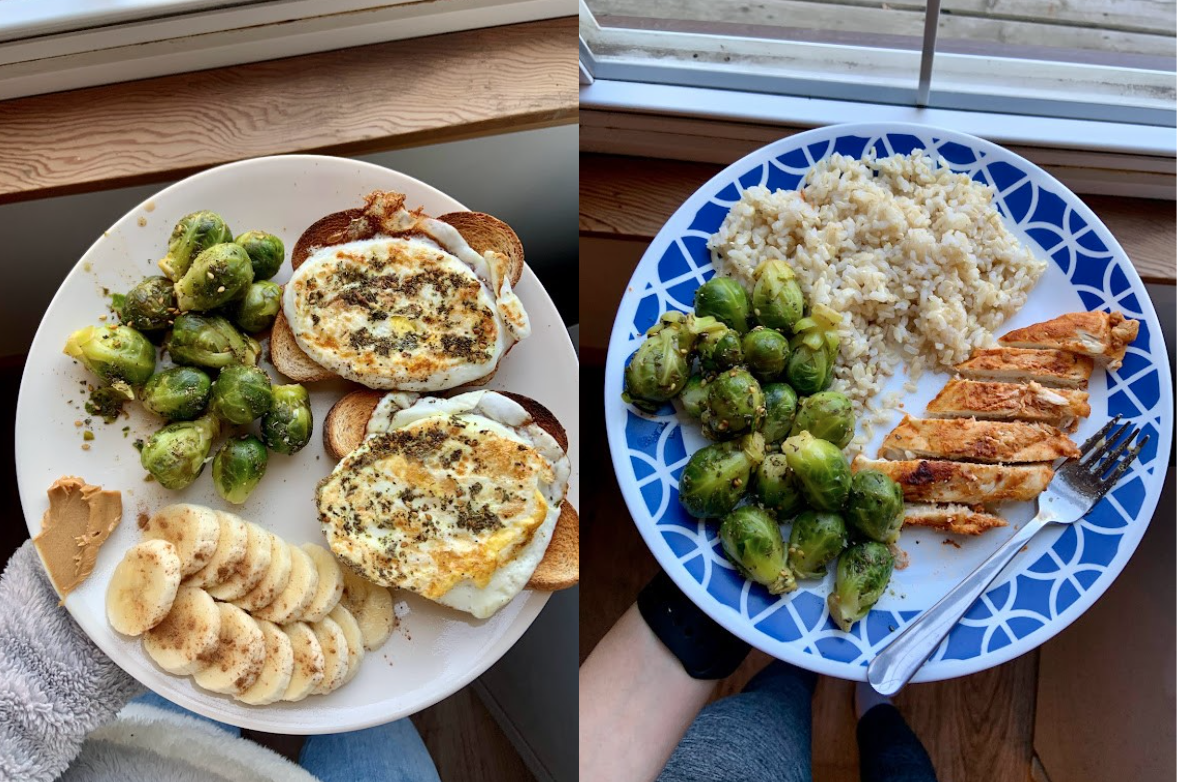
- ¼ of the plate grains/starches
- ¼ of the plate protein foods
- ½ plate of the plate non-starchy vegetables/fruits
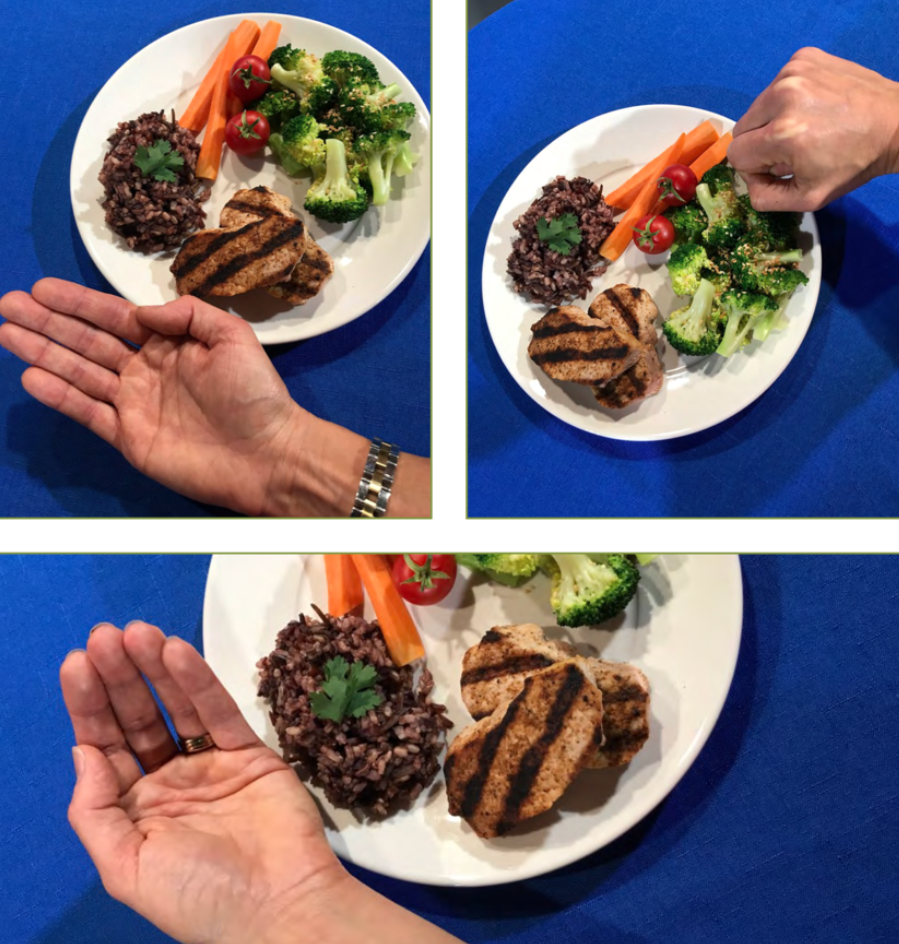
We can also use our hands as a rough comparison:
- 1 or 2 cupped hands for grains/starches
- 1 palm size for protein foods
- 2 fist sizes for vegetables/fruit
- 1 thumb size for added fats like olive oil, salad dressing, peanut butter, butter, mayonnaise, etc.
Do portion sizes change based on activity level, age, or goals?
Absolutely! The balanced plate method offers a foundation, but portion needs vary based on many factors.
Activity levels:
More active individuals generally need more energy to support movement and recovery. This may mean increasing the grain/starch portion on more active days.
Age:
Studies show us that protein needs increase as we age to help prevent loss of muscle mass and maintain strength and function. Considering this, the protein proportion of our meals may need to increase slightly for those aged 50+.
Goals:
Some individuals may aim to build muscle, improve athletic performance, or support body composition changes. In these cases, protein needs may be higher, and protein portions can be adjusted accordingly.
How can you use the balanced plate method without tracking or measuring food?
If you’re used to measuring or tracking food, this approach may feel almost too simple at first. That’s normal.
The balanced plate method provides structure without prescribing exact grams or numbers. Instead of measuring, you’re estimating and checking in with your body.
After using the rough portions above at a meal, you might ask:
- Did I feel satisfied?
- Was I comfortably full?
- Did I feel hungry again sooner than expected?
If you were still quite hungry soon after eating, you may need slightly larger portions next time. If you felt overly full, you might experiment with slightly less.
Our needs vary day to day. The balanced plate method gives us a framework, while our hunger and fullness cues help fine-tune it.
If you’re unsure how to do this, we are here to support! Get connected with one of our dietitians who can support you on your journey.
What are common misconceptions about portion sizes?
Carbs should be small or avoided altogether
This is one of the most common concerns I hear from many of my clients.
Carbohydrates are the body’s preferred source of energy. When carbohydrate portions are consistently too small, people may notice fatigue, difficulty concentrating, mood swings, increased cravings, or decreased performance in physical activity.
Carbohydrate portions can absolutely be balanced, but they don’t need to be minimized to build a nourishing plate.
Portion sizes should stay the same day to day
As mentioned earlier, our energy and nutrient needs may differ for many reasons, such as activity, stress, sleep, illness, and many other factors.
For example, if you are more active one day compared to another, you will likely need slightly larger portions than a more sedentary day. Listen to your body and adjust your portions as needed.
“Healthy foods” don’t need portion awareness
Often what we recognize as “healthy foods” such as avocados, nuts/seeds, olive oil, granola, etc., may be eaten more freely and with less portion awareness. While these foods can often be nutrient dense and packed with protein, healthy fats, fibre, etc., they may also be calorie dense.
Recently, I had a client who shared that they were enjoying 1-2 cups of nuts per day as a snack. Nuts can be a nutrient and calorie dense food and may benefit from mindful portioning. We adjusted their portion to about ¼ cup and paired it with fruit or a homemade muffin to create a more balanced and satisfying snack.
One packaging serving = ideal portion
The serving size listed on food packaging reflects what is typically consumed, not what any individual should eat. Your portion may be more or less than what’s listed, depending on your needs that day.
For more information on healthy label reading, check out How to Read Nutrition Labels: A Beginners Guide.
Are there limitations to the balanced plate method?
More challenging for mixed meals
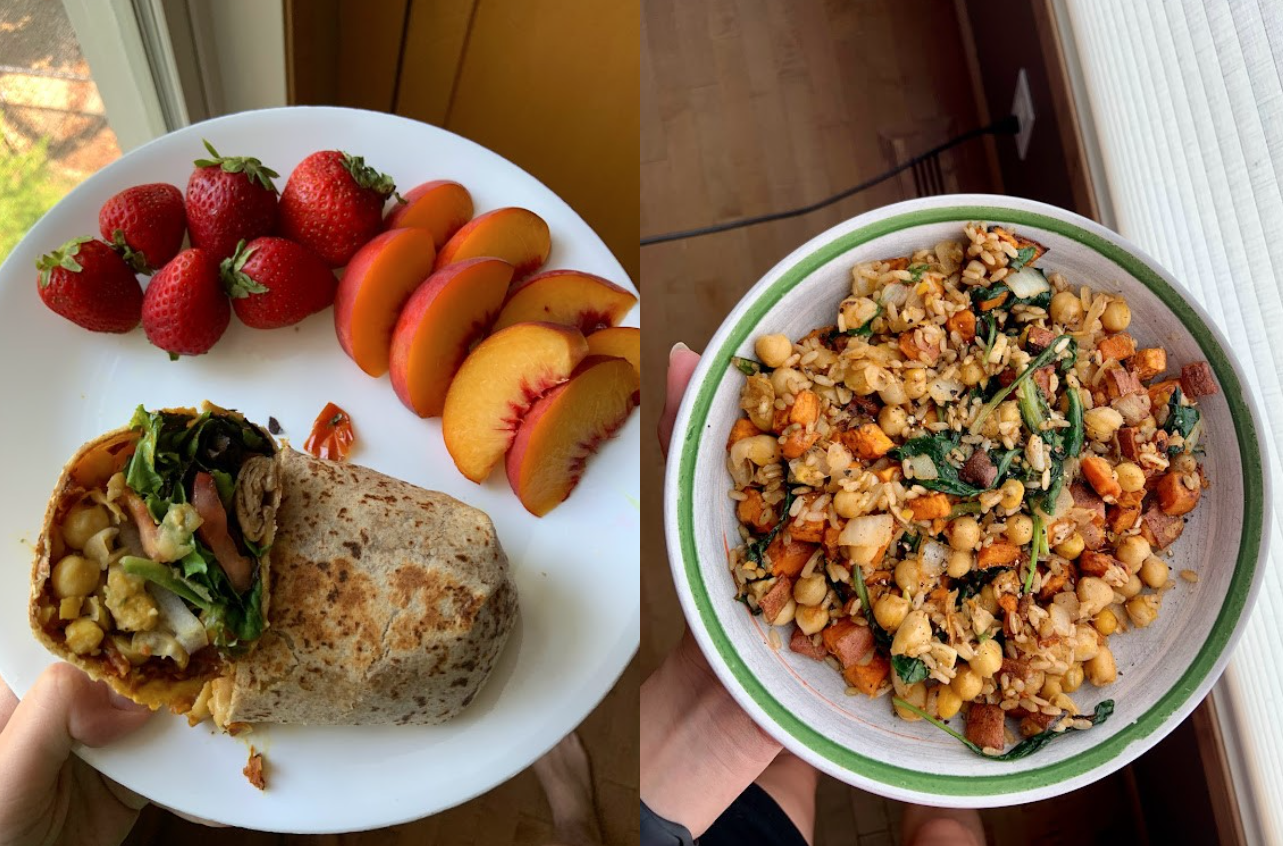
For mixed meals like soups, stews, curries, or casseroles, everything is combined, making portions harder to visualize.
If helpful, consider the overall ingredient balance when preparing the meal. For example:
- Roughly half vegetables
- A quarter protein foods
- A quarter grains/starches
It doesn’t need to be perfect, do your best to aim for a general balance.
Below are some examples of balanced mixed meals.
For some individuals, such as competitive athletes, more specific nutrient targets (like grams of protein per kilogram of body weight) may be helpful.
The balanced plate model provides a flexible framework but does not calculate precise nutrient amounts.
Portion sizes don’t need to be complicated or overly precise for most people. The balanced plate method offers a simple, flexible framework that can help you build meals that feel nourishing, satisfying, and supportive of your daily needs, without measuring or tracking everything you eat.
Remember, portion sizes are not one-size-fits-all. They can shift based on activity, appetite, age, and many other factors. Use the balanced plate as a starting point, stay curious about your hunger and fullness cues, and allow room for flexibility and adjustment over time.
Looking for further support in making lifestyle changes? We can help!
Unsure where to start or feeling stuck on the way? Get connected with one of our dietitians who can support you on your journey. We have a team of experienced dietitians who are passionate about coming alongside you and finding personalized solutions to your nutrition challenges.
As university trained Registered Dietitians, you can count on us for credible advice and practical meal planning so you don’t have to stress about food anymore. You can achieve a healthy and joyous relationship with food and your body. Let’s talk about what this can look like for you.
Check out similar blogs on our website:

Brought to you by our friendly Registered Dietitian team at Health Stand Nutrition Consulting Inc. For more balanced living advice check out our RESOURCE MEGA BANK of nutrition articles, videos, healthy recipes, newsletters and meal planning kits here: www.healthstandnutrition.com/personal-nutrition/resource-mega-bank/
