
Everything You Need to Know About Celebrating Chinese New Year with Hot Pot 

Learn more about Chinese cuisine, specifically Hot Pot from a Chinese Dietitian!

What’s One of The Most Traditional Chinese Dishes?
As you can imagine, I’ve already been asked many times, “what is the most authentic, traditional Chinese cuisine?” Well, it’s indeed a tricky question to answer, because China is very large in its land area; therefore, Chinese cuisine varies a lot from province to province, even city to city.
One well-known eating pattern is that people living in northern China love noodles, whereas rice is usually the staple in southern China. However, this one Chinese cuisine I am about to introduce you to, Hot Pot, originated in China at least 2000 years ago and is still popular across China, such as spicy hot pot in Sichuan (四川), lamb copper hot pot in Beijing (北京), mushroom hot pot in Yunan (云南), beef hot pot, coconut chicken hot pot and rice porridge hot pot in my hometown Guangdong (广东).
Everything You Need to Know About Hot Pot
Hot pot is probably one of the easiest Chinese cuisines one can start with as it requires no advanced cooking skills. All you need is a pot, a heat source, preferably a portable induction cooker, some kind of soup base you like, and foods – basically, any foods cut into bite-size are suitable for the hot pot. Traditional Chinese soup bases are usually available in Asian supermarkets, or simply ask your Chinese friends where they get it from. Similarly to fondue, it is the soup base you boil foods in that gives them the flavour. Some people also like to have a separate dip on the side to further enhance the flavour.

Benefits of Hot Pot
One thing I love the most about hot pot is its perfect combination of cooking and eating. Yes, no prolonged standing in front of the stove, everyone can be involved in food preparation, and you get to decide what and how much food you want as you eat. There are of course other things I love about hot pot.
Since any food can go into the hot pot, I could enjoy a great variety of food all in one setting, or if I want to use up any ingredients left in the fridge to prevent food waste. It’s also a great time to try any new foods because I am not committed to finishing them all if I don’t like them cooked this way; simply save the ingredients for a different recipe.
In addition, the fact that it takes time for foods to be cooked in the hot pot also creates an opportunity to practice mindful eating and allows people to build social connections while waiting.
Special Considerations & Tips
However, there’s always a downside to everything, and here’s why a hot-pot-loving Dietitian wouldn’t eat it every day.
1. Sodium and fat content
First of all, commercial Chinese hot pot soup bases tend to be quite high in sodium and fats; as do most hot pot dips. Consider only using 1/2 package of the soup base and top up the flavour with unsalted chicken or vegetable broth. You may also dilute your hot pot dip with broth if you want additional flavour, or skip it if you find enough flavour in the hot pot alone.
2. Purine content
Another thing to consider, especially if you have gout, is the purine in the hot pot, which can accumulate to a very high level from the foods being added over time. For those who have gout but would still like to try out hot pot, here’s what I would recommend. Limit high-purine foods you add to the hot pot, such as meat, poultry, fish and seafood, especially organ meat. Don’t drink the soup base since purine is water soluble, or scoop out a little before adding any foods in. You may also consider changing the soup base more frequently instead of refilling the hot pot with water or broth. In addition, don’t forget that alcohol is another great source of purine, so please avoid drinking alcohol at same time as you’re enjoying hot pot.
3. Easy to lose track of portion sizes
Lastly, because you eat as you cook, it can be challenging for people who already struggle with portion sizes. First of all, continue to check in with your body as you eat, just like how you’ve been practicing at other meals. If you have prepared a great variety of foods to add to the hot pot, such as more than 10 or 15 different ingredients, remember that you probably only need a couple of bites of each to become full.
Another trick is that the more people you invite, the greater variety you get to enjoy without being stressed out about food waste, or simply going to an all-you-can-eat hot pot restaurant, but don’t forget to remind yourself the purpose is not to “eat your money back”. It is also important to pre-plan or be mindful about what foods you’d like to have in the hot pot to make sure it can still be a balanced meal, which essentially helps with portion control.
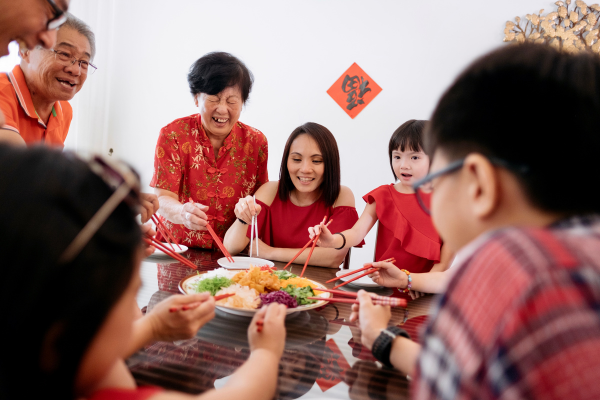
Nevertheless, it is still very common that people, many Chinese people too, will eat past their good fullness while enjoying hot pot; not to mention if this is your very first time. This is because the nature of hot pot is still a feast, which is why even though I do love hot pot, I wouldn’t’t eat it very often. In other words, yes, you are allowed to feel too full after eating hot pot; just treat it as any other holiday feast and carry on.
Happy Chinese New Year!
Looking for further support in making lifestyle and nutrition changes? We can help!
Unsure where to start or feeling stuck on the way? Get connected with one of our dietitians who can support you on your journey. We have a team of experienced dietitians who are passionate about coming alongside you and finding personalized solutions to your nutrition challenges.
Learn more about nutrition counselling or simple contact us below:
Hungry for more nutrition tips? Check out our other blog posts:

Brought to you by our friendly Registered Dietitian team at Health Stand Nutrition Consulting Inc. For more balanced living advice check out our RESOURCE MEGA BANK of nutrition articles, videos, healthy recipes, newsletters and meal planning kits here: www.healthstandnutrition.com/personal-nutrition/resource-mega-bank/
