
Navigating Social Situations and Eating Disorders 

Eating strategies for dining out and parties
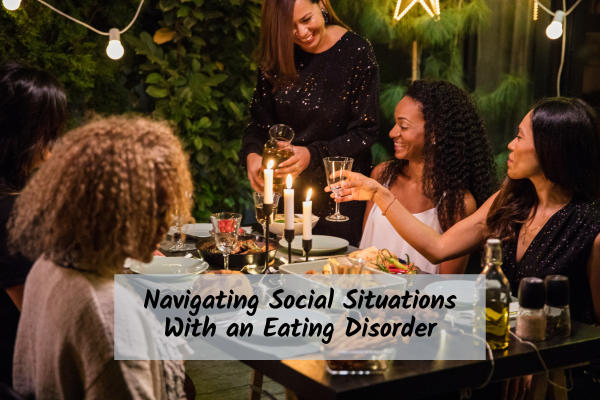
Social gatherings centered around food, such as dining out, parties and potlucks, can be particularly challenging for individuals recovering from an eating disorder (ED) or disordered eating. The unpredictability of menus, the wide variety of dishes, drinks and decadent desserts, can feel overwhelming and leave individuals feeling lost about their food choices. This stress is often amplified by conversations about diets, body image, and social expectations, making these events difficult to manage or even tempting to pass.
However, with appropriate support and a well-thought-out game plan, it’s possible to face these situations with greater confidence and self-compassion. In this blog post, we’ll share 10 practical tips for navigating social eating while prioritizing recovery and self-care.
Challenges of Social Eating with Eating Disorders
To enjoy social events with greater ease, the first step is to understand your personal concerns in these situations. Reflect on the following statements and note if you answer “Yes” to any of them:
Unpredictable Food Choices: I feel concerned about unpredictable food options, how the food is prepared or the ingredients used.
Tendency to Overeat or Binge: I tend to eat beyond fullness in these situations and feel a loss of control.
Suppressed Appetite: My appetite and food intake decrease when I feel anxious or stressed.
Guilt or Shame After Eating: I often feel guilty or ashamed after eating in social situations, especially if I eat more or differently than expected.
Difficulty Saying No: I find it hard to decline food or drink when offered, even if I don’t want it, due to social pressure.
Nervous About Diet Culture Conversations: I feel uncomfortable and don’t know how to respond to comments or conversations about weight, dieting, or food.
Pressure to Conform: I often feel judged by family and/or friends for what I choose to eat or portion sizes.
Emotional Overload: I feel anxious about eating in public or in front of others.
Fear of Disruption to Routine: I worry that attending social events will disrupt my usual eating routine and make it harder to return to my food plan afterward.
10 Practical Tips for Navigating Social Eating During Recovery
We will explore the 10 tips across three stages: Pre-event, During the event and After the event, to guide you through social eating.
Pre-Event Preparation
1. Embrace the Flexible Mindset
Understand that perfection is neither the goal nor a realistic expectation. Focus on enjoying the experience and the company rather than controlling every aspect of the meal. One meal or event won’t define your progress in food relationship recovery. Instead, view it as an opportunity to build resiliency and develop a toolbox of strategies you can rely on in the future.
2. Plan Ahead for Success
Review the menu in advance (if available) and identify food and drink options that align with your recovery goals and provide comfort. Try to include various options from different food groups for balanced eating. This can help reduce the stress of last-minute decision-making. Dietitians specializing in eating disorders can walk you through the options and provide personalized suggestions.
When choosing an outfit, prioritize comfort–both physically and emotionally– over appearance. Opt for fabrics and styles that reflect your personality while ensuring you feel at ease, not just before eating but also afterward. Remember, your presence matters most, not how you look.
3. Practice Thoughtful Responses
Diet talks and body comments often come up in social settings. While you can’t always control what others say, you have the power to manage our response. Prepare neutral responses in advance by writing them down. Gently guide the conversation toward neutral topics like common interests, current events, or upcoming plans. For example:
- “I’m working on being kinder to myself, and not getting caught up in food and body talk. Let’s focus on catching up–How was your vacation?”
If declining food or drinks feel difficult, remind yourself that it’s okay to set boundaries politely without guilt. A simple response can help you stay true to your needs without offending anymore. For example:
- “Thank you! This is one of my favourite dishes! At this moment, I’m taking a break and would love to play some cards instead. Would you like to join me for a game?”
By having these thoughtful responses ready-to-go, you can navigate these conversations confidently while maintaining the flow of the social interactions.
4. Lean on a Supportive Person
Identify someone at the event who understands your journey and ask them to be your supportive companion in advance. Their presence can offer reassurance and emotional support, helping you navigate uncomfortable situations and help steer conversations away from your personal triggers. If no one at the event fits that role, consider inviting a trusted friend or family member if appropriate. Bringing small fidget tools or calming distractions with you can also help channel stress and maintain your sense of calm.
If you are in a role to support a loved one with ED, check out the following resources for additional information.

During the Event
5. Use Mindfulness Techniques
Take a moment to observe all the food and drink options before making a selection and taking a bite. Take your time eating, chewing food thoroughly, and engage your senses by noticing the colors, textures, and aromas of the food. This can help reduce anxiety and reframe the experience as enjoyable. Wait 15-20 minutes before deciding on seconds to allow the body to register fullness and adjust based on how you feel.
6. Respect your body’s needs
Pay attention to your body’s hunger and fullness cues and aim to nourish yourself without judgment. It’s perfectly fine to leave food on your plate or go back for seconds if needed. However, if stress dampens your appetite and it is a challenge for you to eat adequately, try practicing mechanical eating—eating according to a set schedule, rather than waiting for hunger to strike.
7. Give Yourself Space to Recharge
If the situation becomes too overwhelming, take a moment to step away. Whether it’s a quick walk, a restroom break, or practicing breathing exercises or grounding techniques, these actions can help you reset, regain focus and calm your mind.
8. Focus on Your Own Needs
Everyone’s needs are unique. Instead of comparing your plate to others, focus on your recovery plan, especially if you and your dietitian already have one in place.
For more tips, check out the following blog posts:
5 Unhelpful “Food Rules” You’re Likely to Engage in Over the Holidays and What to Do Instead
Feel Confident This Holiday Season with These Food & Fashion Tips

After the Event
9. Debrief with Your Support System
Take time to reflect on the experience by celebrating your wins and identifying areas where you felt challenged. Your therapist and/or dietitian specializing in ED can offer valuable perspectives, acknowledge your progress, help brainstorm solutions and reinforce your coping strategies, ensuring you feel more prepared for future social events.
10. Practice Self-Compassion
Recovery is a journey, and navigating social eating with ease is a skill that takes time and practice—much like learning to play a musical instrument. Even if the experience didn’t go as planned, take pride in showing up and making an effort. Embracing patience and self-compassion for any perceived setbacks helps build resilience and supports a smooth return to your usual eating routine.
Final Thoughts
Dining out and attending parties during recovery from ED can be intimidating, but these situations offer valuable opportunities for growth and connection. With thoughtful preparation, self-awareness, and a solid support system, you can rediscover the joy in social eating and create meaningful moments these gatherings bring.
Feeling uncertain and in need of guidance for your next steps?
Connect with one of our dietitians and nutritionists trained in Eating Disorders for personalized support and access to the resources you need to thrive!
Learn more about nutrition counselling for eating disorders (check out the testimonials) or simply click the link below to get in touch and discuss your needs:
For more blog posts about navigating eating during recovery, check out these previous blog posts:

Brought to you by our friendly Registered Dietitian team at Health Stand Nutrition Consulting Inc. For more balanced living advice check out our RESOURCE MEGA BANK of nutrition articles, videos, healthy recipes, newsletters and meal planning kits here: www.healthstandnutrition.com/personal-nutrition/resource-mega-bank/
